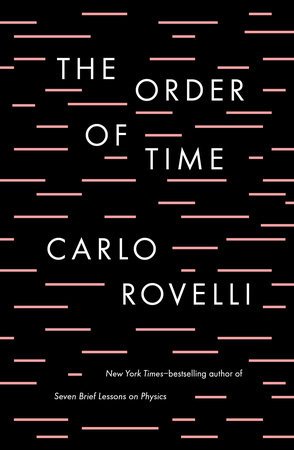
I have been reading, loving and learning a great deal from The Order of Time, the latest book from the brilliant Italian physicist, Carlo Rovelli. Below are some notes on some of the ways in which I have found his discussion of time resonant with my own work and thinking.
Moths to the Flame: Photography and the Capitalocene
Below is a paper that I presented at a workshop on capitalism and photography held at the University of Toronto, September 15-16, 2017. I will be working on it for the next several months, in preparation for it being included in a collection of essays on Capitalism and the Camera that is being edited by Kevin Coleman, Daniel James, and Ariella Azoulay. Comments and suggestions are welcomed.
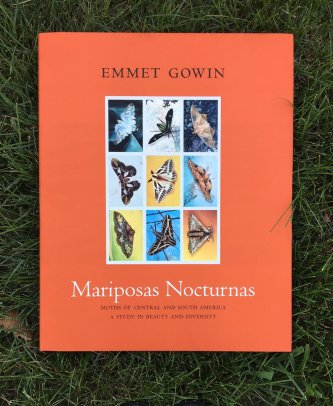
For the past 15 years, the American photographer Emmet Gowin has been photographing more than a thousand species of moths on visits to Bolivia, Brazil, Ecuador, French Guiana, and Panama. This month, Princeton University Press will publish a monograph of these images, titled, Mariposas Nocturnas: Moths of Central and South America, A Study in Beauty and Diversity. Since the book has yet to be released, and I did not have the opportunity to see the recent exhibition of these images at the Morgan Library, I am operating at the moment with a bit of a deficit. I was recently drawn to this photography project while exploring the figure of the moth in modern philosophy and criticism; a series of references that ranges from Part Two of Heidegger’s 1929-30 lecture course on The Fundamental Concepts of Metaphysics and his discussion of the animal as being “poor in world,” to Guy Debord’s last film (1978), the title of which, In girum imus note et consumimur igni, is the ancient phrase that, as a palindrome, reads both forward and back: “We turn in the night, consumed by fire.” Finally, to Giorgio Agamben who, in his book The Open: Man and Animal (2002), and more recently in The Use of Bodies (2014), considers Heidegger and Agamben’s uses of the figure of the moth as an emblem of captivation that is, respectively, either a non-revelatory instinctual drive or as being completely consumed by the bright light of spectacle.
VIDEO of my talk and workshop at the ICI-Berlin
Intimacy, Loss, Anonymity
Toward a Theory of Queer Neutrality

For the past 20 years, after having curated the Chicago exhibition ‘Disappeared’ on AIDS and an aesthetics of disappearance, John Paul Ricco has theorized erotic and aesthetic relations to loss and withdrawal tied to specific junctures of late-20th-century gay male culture and contemporary art and film. He has shown anonymity to be an irreducible relational form of the ethical – in particular in terms of social and sexual intimacy.
The workshop discussed Ricco’s paper ‘Mourning, Melancholia, Moonlight’, a work-in-progress on ‘neutral affect’ that is part of his ongoing conceptualization of queer neutrality. The essay draws on Roland Barthes’s conception of neutral mourning and relates it to Barry Jenkins’s film Moonlight (2016) and its presentation of an affective relation to loss that is distinct in its temporality from Freud’s ‘Mourning and Melancholia’.
By attending to the empirical contingency of the extemporaneous and erotic/aesthetic moment as the scene of feeling queer, Ricco is interested in thinking a time of affects that disrupts neo-liberal scripts of self-becoming and what is commonly referred to as an ‘event’. In addition, Ricco attends to the nuanced images of black masculinity that – he argues – are not adequately rendered by prevailing gender performative readings of the film.
Apart from ‘Mourning, Melancholia, Moonlight’, two additional essays of Ricco were circulated in advance: ‘Intimacy: Inseparable from Separation’ (Open Set, May 2017) and ‘The Commerce of Anonymity’ (Qui Parle, June 2017).
Click here to go to the ICI-Berlin event page to access the videos: Intimacy, Loss, Anonymity: Toward a Theory of Queer Neutrality
Only the end of the Humanities can save us now
I want to pick up on a question that I posed at the end of my last post, in which I asked, “How might the humanities, precisely in terms of some of its principal objects (art, poetry, literature, film), equip us with the means to contend, not only with the limits of humanism, but also with the end of the human?”

This summer I have been reading and gaining a tremendous amount from Claire Colebrook’s two volumes of essays on extinction: Death of the PostHuman, and Sex After Life. At the same time, I have been crafting the course syllabi for the two seminars that I am teaching this fall term (2016).
Upon first glance, it may appear that the two seminars, “Queer Ethics & Aesthetics of Existence,” and “The Collective Afterlife of Things,” are at odds with each other. With their respective focus on questions of existence and extinction, it might seem as though the first course seeks to affirm the value of a certain form of human life, while the other seeks to consider the post-human and that which is not defined in terms of “life.” However they are in fact two major parts of a single ongoing theoretical endeavour to think what a thought and ethical-aesthetic praxis might be, in the absence or extinction of the human, life and, the living on or long-term survival of a collective “we.” Colebrook’s work has proven to be an indispensable companion as I think about these two courses in relation to each other.
Rooted as it is in the Foucault of finitude and the image of the erasure of the image of the human, “like a face drawn in sand at the edge of the sea,” the queer theory seminar takes Foucault’s aesthetics of existence to be not an ethics of being or becoming, but of unbecoming. An unbecoming ethics is the partaking-together in the inoperative/workless praxis of sustaining the spacing of separation—irreducible to no-thing or substance (i.e. nothing, res/rien)—that exists (exposed) just between us. An “us” that only exists from out of this shared-exposure to the outside, or what Foucault referred to as “madness, the absence of work.” Therefore, this queer aesthetics of existence is an art not of the finished work (oeuvre) but of the un-finished as that which is not given or even readymade, but already-unmade (désoeuvrement).
Further to the point, “whereas [as Claire Colebrook explains] Husserl and Bergson thought that the task that would save thought and philosophy would be the annihilation or acceleration of the natural world, and the destruction of man as a natural body within the world, today it is the possible extinction of the man of ethics and philosophy [and aesthetics] that may allow us to consider the survival of the cosmos” (Sex After Life, 148).
If we take “the man of ethics and philosophy [and aesthetics]” to be the “man of the humanities,” then in a certain very real sense, it is this equation of the end of the humanities with the afterlife of the cosmos that both seminars are dedicated to thinking. Ethics after community, collectivity and life is an ethics of the “collective afterlife of things,” in which, following Colebrook, it is not assumed that there is a “we” (“collective”) worthy of living on (“afterlife”). Which is to begin to think an ethics of inorganic and un-livable existence. In other words, a (queer) ethics and aesthetics of extinction.
Through these seminars and in our reading of Foucault, Colebrook, but also Haver, Genet, Benderson, and Bersani, we come to the realization—without any sense of mitigating irony—that perhaps only the end of the humanities can save the cosmos now.
Theory after Queer Theory and the Subject (and Objects)
Preface to “The Existence of the World is Always Unexpected: Jean-Luc Nancy in conversation with John Paul Ricco”
Published in: Art in the Anthropocene, edited by Heather Davis and Etienne Turpin (Open Humanities Press, 2015). The entire interview (included all references and notes), along with the rest of the 400+ page book, can be read and downloaded here: Art in the Anthropocene
In a recent article in The New York Times titled “Learning How to Die in the
Anthropocene,” Roy Scranton argues that the current geological, technological,
and climatic global situation has shifted the classic philosophical problem
from how to die as individuals to how to die as a civilization. Scranton
served in the United States Army from 2002 to 2006 and was stationed
in Iraq following the US invasion in 2003. A couple of years later, when
Hurricane Katrina hit New Orleans, Scranton realized that he was witnessing
“the same chaos and urban collapse I’d seen in Baghdad, the same failure of
planning and the same tide of anarchy.” It is precisely this inextricable interdependence—
and therefore the always potentially catastrophic destructive
effects—of the natural and technological that Jean-Luc Nancy refers to as
“eco-technology.” For, as Nancy is keen to remind us, “nature always contains
and offers the prime matter for technology, whereas technology alters, transforms,
and converts natural resources towards its own ends.” With “this
eco-technology that our ecologies and economies have already become,”
we are confronted with the geopolitical logic of globalization today. What is
new about the eco-technical logic currently operating is that the reciprocal
relations between the economic and ecological wed technology and nihilism
at an unprecedented worldwide scale, one that may prove to encompass the
human species. But proof for whom in that case?
As Nancy goes on to argue, “whereas until now one used to describe ends
(values, ideals, and senses) as being destitute, today ends are multiplying
indefinitely at the same time as they are showing themselves more and more
to be substitutable and of equal value.” It is based upon this understanding
of the equivalency of ends constructed by the eco-technical, that Nancy has
provided ways in which to think about the connections between the Iraq invasion
and Hurricane Katrina as at once military, geopolitical, technological,
natural catastrophes, and environmental disasters. Which is not to cast them
as equivalent catastrophes, but rather to understand them as events entirely
caught up in the catastrophic logic of general equivalence in which every
moment has become economized, as every single thing has been monetized.
In response to this, Nancy has put forth the notion of the “condition of an
ever-renewed present,” which he goes on to define as “not an immobile present
but a present within historical mobility, a living sense of each moment,
each life, each hic et nunc [here and now]. A sense that is characterized by
exposure to its own infinity, to its incompleteness”—and thus, we might add,
to its in-equivalence to every other moment and thing.
So perhaps it is not only a matter, as Roy Scranton argues, of learning to see
each day as the death of what came before, but in doing so, of seeing that
day as the birth of the present in and as its own—ever-renewed—finitude.
Meaning: no longer the projection of a future or as part of the project of
future ends. Instead, as Nancy has recently argued, “what would be decisive,
then, would be to think in the present and to think the present.” That is,
of the present not as absolute and final presence, but as appearing near,
proximate, close to, and in rapport with. As he goes on to explain, if one
wants to speak of “end” it is necessary to say that the present has its end in
itself, in both senses of goal and cessation. The finitude of each singularity
is thus incommensurable to every other, and therein exists the equality of
all singularities—their in-equivalence. It is in this way that Nancy calls for
an adoration of—or esteem for—the inestimable singularity of living beings
and things, and the equality that lies in their in-equivalence to any general
schema, measure, principle, or horizon. This is a matter of attending to the
inestimable worth of things as opposed to the appropriation of each and
every priceless experience. Therefore Nancy closes his recent book After
Fukushima: The Equivalence of Catastrophes, with the following claim: “To
demand equality for tomorrow is first of all to assert it today, and by the
same gesture to reject the catastrophic equivalence. It is to assert common
equality, common incommensurability: a communism of nonequivalence.”
For Nancy, the proliferation of so many common ordinary things today is
not only the obvious evidence of capitalist production and accumulation,
but also the fact that (as quoted above) “ends are multiplying indefinitely,”
and precisely for this reason offer “more and more motives and reasons to
discern what is incomparable and nonequivalent among ‘us.’”
Therefore, as Maurice Blanchot contended in 1959, when philosophy lays
claim to its end “it is to a measureless end,” such that “measurelessness is the
measure of all philosophical wisdom,” so too in our reading and engagement
with the work of Jean-Luc Nancy today do we come to realize that when
philosophy (or more modestly, thought) confronts the prospect of the end
of humanity, that the incommensurable remains the measure of eco-technical
wisdom. Furthermore, given the ways in which Nancy has enabled us to
understand art as “the privileged domain for an interrogation of finality,”
aesthetic praxis is one of the principle means by which we confront the
problematic of ends. It is in this way that his comments below will prove
indispensible to ongoing considerations of the interconnections between
art, aesthetics, politics, and environments in what has come to be called the
Anthropocene.
The Collective Afterlife of Things
In 2015-16 I will be a Faculty Research Fellow at the Jackman Humanities Institute, University of Toronto. Released from all teaching and administrative duties, I will have the opportunity to devote the year to further research for one of my two current research projects on “the collective afterlife of things.” Here’s a brief description of the project.
Based upon the conjecture of the “collective afterlife” recently put forth by the philosopher Samuel Scheffler (Death and the Afterlife), in which he argues that our ability to lead value-laden lives is more dependent upon our confidence in the long-term survival or afterlife of humanity, than our concern with our own survival of death or that of our friends and loved ones, my project asks: what do things tell us about societies and the social dimension of valuing things as mattering, not only based upon their histories, but upon their futures? In other words, their collective afterlives. Based upon this “futurity thesis” of ethical decision, action and responsibility, my project is further motivated by the following question: in what ways are aesthetic forms and experiences, including art as a thing that matters, both in terms of artistic practice and as artistic object/work/thing dependent upon a shared confidence in the future survival of humanity? I explore these questions, by extending and developing upon work that I have recently published in my book The Decision Between Us, on forms of inoperative aesthetic praxis that consist in collectively partaking in the decision to participate in the withdrawal, retreat, and disappearance of the work of art, including in the work’s material manifestation and configuration of things. Out of this I have developed the notion of the already-unmade, as the deconstruction of Duchamp’s readymade work of art. With this current project, I want to identify and examine a number of artistic, literary, and filmic examples, beyond those that I focused on in my recently published work.
The Securitized Footprint and the Economy of the Eve
Abstract of a Paper in-progress
The first half of my paper is a reading of texts by French philosopher Jean-Luc Nancy on religion, the divine and the sacred, art and aesthetics, and specifically on the attention that he has given to questions of place within philosophical and theological discourses. For as early as 1985 in his essay “Of Divine Places,” Nancy has argued that the question of God is not (or no longer) a question of being, essence, and presence (what is God?) nor of temporality, messianicity, and the infinite (when is God?), but a question of place and distinct location (where is God?), and what Nancy has more recently named “dis-enclosure.”
Given that in the philosophical and religious history of the West, the gods and God have always been departing, a divine place is not a taking place but a place of withdrawing and retreating (in absconditum). According to Nancy, if there is a divine place, it is at/from the step, less a footprint than a footfall or tread, where the latter is understood to be nothing other than the separated touching of sole and ground. As Nancy writes toward the end of “Divine Wink” (2003): “The step is the divine place, the only one, the place in which the power of the passing manifests and transcends itself” (119). In addition to finding one of its homologies in “wink,” (based upon a reading of Heidegger on “the last god”), the step is, as Nancy explicates via a recourse to etymology, a vestige (vestigium) and as such is the remains of a step, not as image or perhaps even as indexical sign, but in terms of the touch of the step, its operation and its place. The latter used here by Nancy “in the strong sense of the word is always the vestige of a step” (“Vestige of Art,” 98), and hence a divine place.
In the second half of the paper, I turn to the recently opened National 9/11 Memorial at Ground Zero in lower Manhattan, in order to ask whether its deep recesses—exactly coinciding topographically with the two so-called “footprints” of the World Trade Center towers, might not be understood as a monumental securitization of the site, a hollowing out of the ground to its purported zero degree and that, less as profanation than divinization, renders it as hallowed and perhaps sacred ground, distinct from Nancy’s conception of divine place.
Finally, by drawing together Nancy’s recent writing on the empty tomb as distinct from the temple/cave, and the question that Derrida posed at the end of his 1968 lecture “The Ends of Man:” “Is there an economy of the eve?” I speculate towards a sense of spacing, aesthetics and archi-ethics as the withdrawal and retreat of architectural limits or the eves of the temple and the oikos (perhaps neither to nor from the temple but at and on its eve, that is to say, its threshold, opening, offering and infinitely finite access). And of temporality less in its coming than its passing by, like the step of the Gods, the departed, and perhaps even the ones who, in stepping from the heights of the towers on that September morning, caused so many of us witnesses to exclaim “my god!”
Following Nancy, I contend that this is the utterance of freedom as freedom unto nothing—nothing but the withdrawal and retreat from absolute destination or resurrectional return. This is at once the freedom of those who stepped out from the precipitous edge of the towers, and the utterance of those looking up at the sky and at the instant of witnessing each body falling. This is what I take it to mean when Nancy writes of “an utterance, and as ‘my’ utterance to the precise degree that it comes to me from the other who, in passing, gives me a sign, and whose Wink I respond to with ‘my god!’—without my having actually to say this word, whose ‘sense’ is to name or rather to mark, to remark, and to exclaim the passing itself and the passing not as a state but as a passerby whom I call to address, having perceived his step and the signal of that step” (“Divine Wink,” 116, original emphasis).
The economy, archi-ethics and aesthetics of the eve that I wish to think and present here, is an attempt to understand how the National 9/11 memorial, rather than staging the “zero mystery” (“Divine Places,” 140) and zero plan at ground zero, is a securitizing of the footprint, which is also to say—with a view of the water that endlessly flows into the memorial’s seemingly bottomless depths: “the baptizing [of] our abysses” (“Divine Places,” 113). Not a temple per se, but like every temple, the memorial is an attempt to guard against the departing, desertion and destitution of this kenosis from being an absolute abandonment in the form of a bare and empty place. For the “temple,” whether Greek, Jewish, Christian or Muslim, monumentalizes destitution and desertion, and provides shelter and protection not from these forces, but for them, in the finite form of architectural enclosure and spatial detention. Indeed it is remarkable to realize that the memorial at Ground Zero can be understood as a condensation of the four figures of the temple, as outlined by Nancy in his essay “The Indestructible:” Greek (contemplation of ruinous destruction and artistic metamorphosis); Jewish (twice destroyed and source of diasporic meaning, the latter in this case perverted for the purposes of waging a global war on terror); Christian (infinite construction, dome and spire, technology contemplating itself); Islamic (heart as black rock, reserved space, impenetrable and indestructible thing). Indeed, as Nancy states, this remains the current four-fold of the world, and with no small sense of regret we might agree with Martin Filler who, in his rave review of the memorial, bestows on Michael Arad, its designer, the status of “one of the signal placemakers of our time” (“A Masterpiece at Ground Zero,” New York Review of Books, October 27, 2011).
Throughout the paper, I will attend to many of the structuring tensions that Nancy’s work has focused on, including what he retains and refuses in notions of the sacred and divine (and how more recently he has thought this difference in terms of the image and the distinct); the difference in earlier work between bare place and bare thing (the latter of which will be theorized as “vestige”); tomb/grotto as opposed to temple/cave; resurrection versus the raising of the body; the ob-scene and the fore-scene; and the empty and what I have come to call the already un-made.
Genocide of Queer Futurity
This is about the way in which bullying (not “teasing,” which inevitably sounds—that carries the sense of being—all too playful and almost endearing for what I am trying to talk about here), is increasingly part of a deliberate and systematic effort to exterminate the lives, not just of single individuals who are typically its direct target, but an entire generation of contemporary queer youth. This post is about the very real brutality that drives what I propose to think of as a two-fold genocidal image of queer futurity.
Forcibly and relentlessly imposed upon the psychic imagination of queer youth, the genocidal futurity that drives bullying takes the image-form of a future that is never free of ridicule, denigration, debasement, humiliation, abandonment. It is a matter of ceaselessly creating the sense of absolute isolation that comes from being constantly ignored and incessantly scrutinized, of being rendered invisible and made to appear as the only thing visible, of being made to feel as though neither the shelter of the private nor the solidarity of the public can provide anything but the most false of assurances. In the end, of being made to feel that there is no way out, no one to turn to, in a word: no future. On the other side, in which genocidal futurity is forcibly and relentlessly imposed by the psychic imagination of societal homophobia, it takes the image-form of a future that is, once and for all, free of the difference, anti-normative, affirmative, courageous, and determined psychic-sexual-social power that has been the source of queer life for decades. It is the phobic imagination of a future with no queers.
It is precisely in this two-fold and double sense of the extermination of futurity: of queer youth and of a future without queers, that the current and deeply pervasive campaign (and it is a concerted, endorsed, and insidiously coordinated effort) must be understood as the genocide of queer futurity.
When a society such as ours, today, manages to find ways to make its victims kill themselves, it has achieved a degree of genocidal evil that simply has not been known up until now. We can no longer say—or not simply and solely—when a queer kid takes his or her own life, that he/she has committed suicide. For while the life that has ended was singularly theirs, the death of self was not one for which they are solely responsible.* Just as much as we can speak in terms of “suicide-by-proxy,” in order to categorize the murderously warped psyche of the self-hating serial killer, I propose that we speak in terms of “genocide-by-proxy,” in order to identify a societal hatred and genocidal extermination that has become so internalized that the subject of vilification kills him/herself, not simply because of the harm that has been endured in the past, but also and perhaps even more so, because he/she is forced to envision the endless perpetuation of this brutality as the kind of life that they will endlessly endure in the future. Which is to say that the agonizing temporal relation of these deaths cannot be understood as wholly of the past, tied to prior suffering (its incidents as well as the false “lull” between attacks, and irregardless of regularity/irregularity). No. For in confronting the reality of these deaths, I think we face something much more troubling about them. Which is the way in which they can be understood as responses to suffering that has not yet happened, that is still to-come, and that in its guarantee, delivers a blow that is felt as strongly as the bludgeon that was the latest and yet in no way is felt to be the last.
Of course death, by definition, is always the preemptive appropriation of the future, and when that already violent appropriation is brutally imposed by others onto others it becomes murder, and when that murder takes the form of exterminating an entire people, in this case of a generation, it is genocide. Therefore, when the target of the genocide is young queer people, as it is here, it must be understood as the genocide of queer futurity. And when the only image that young queers are made to envision is one of past brutality extending infinitely into the future, this too must be understood as the genocide of queer futurity. So I’ll end with something that I stated above: When a society such as ours, today, manages to find ways to make the victims of its violence kill themselves, it has achieved a degree of genocidal evil that is simply unprecedented in its effective obfuscation of actual responsibility and its triggering of an auto-immune response. It cannot get any worse than that. Or can it? And is this not the reason to remain committed to the sense that it gets better, precisely as a future without guarantee?
*For a discussion of the ways in which this argument corresponds with some of the most recent psychological theories of the motivational factors of suicide (including the work of Roy Baumeister) see Jesse Bering’s blog “Bering in Mind,”on the Scientific American web site: http://www.scientificamerican.com/blog/bering-in-mind-blog/. Specifically when he writes: “Psychodynamic theorists often postulate that suicidal guilt seeks punishment, and thus suicide is a sort of self-execution. But Baumeister’s theory largely rejects this interpretation; rather, in his model, the appeal of suicide is loss of consciousness, and thus the end of psychological pain being experienced. And since cognitive therapy isn’t easily available—or seen as achievable—by most suicidal people, that leaves only three ways to escape this painful self-awareness: drugs, sleep and death. And of these, only death, nature’s great anesthesia, offers a permanent fix.”
 unbecoming community