I am very pleased to receive this review of my book by art historian Tom McDonough, that was recently published in the journal Critical Inquiry. Click on the link below to access the complete review.
One measure of the past 18 months
- “The Inoperative Praxis of the Already-Unmade,” in Labour, Work, Action, edited by Michael Corris, Jaspar Joseph-Lester, and Sharon Kivland, Artwords Press, 2013.
- John Paul Ricco, The Decision Between Us: art and ethics in the time of scenes, University of Chicago Press, 2014.
- “Pornographic Faith: Two Sources of Naked Sense at the Limits of Belief and Humiliation,” in Porn Archives, edited by Tim Dean, Steven Ruszczycky, and David Squires, Duke University Press, 2014.
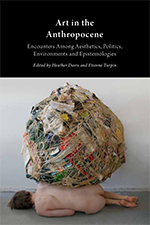
- “The Existence of the World is Always Unexpected: Jean-Luc Nancy in conversation with John Paul Ricco,” in Art and the Anthropocene: Encounters Among Aesthetics, Politics, Environments and Epistemologies, edited by Heather Davis and Etienne Turpin, Open Humanities Press, 2015.
- “The Separated Gesture: Partaking in the Inoperative Praxis of the Already-Unmade,” in Nancy and the Political, edited by Sanja Dejanovic, Edinburgh University Press, 2015.
- “Parasol, Setas, Parasite, Peasant,” in J. Mayer H.: Could Should Would, Hatje Cantz, 2015.
- PLUS: “Drool: liquid fore-speech of the fore-scene,” in World Picture, issue on “Abandon,” summer 2015 ( available online).
Forms as Scenes
The other day I read Michael Wood’s review of Caroline Levine’s new book, Forms: Whole, Rhythm, Hierarchy, Network (Princeton, 2015) in the London Review of Books (27 August 2015), and now I am curious to read Levine. Not because the four principal forms that she focuses on (listed as the book’s subtitle), are the kind of forms that I am interested in, but primarily for two other reasons.
The first, as Wood describes it, is Levine’s “suggestion that forms are never alone, that they get in each other’s way.” To think about forms as non-autonomous, is of course to completely re-define what we mean when we speak of forms. Here, forms are less stable, self-contained, and isolated entities, than they are understood to be mobile, touching, overlapping, colliding and contaminating formative and “de-formative” forces. Their boundaries and limits are permeable or fluid, extending and overflowing. Contrary to conventional meaning and understanding, forms are not closed, but open. In a sense, we might say that it is at the place, zone, line or contour of the formative force of collision (for instance), that form is formed—as always singular plural. This leads me to want to make the claim not that there is (or are) a form of co-existence or being-with (formalism of the social and of form), but that the spacing of the “with” is what form means—both form’s source and sense.
Which leads to the second, equally if not more so, provocative and enticing theoretical approach of Levine’s, the one that Wood thinks “it’s worth pausing over…since it’s quite rare, and very promising.” At which point he hands the floor over to the author, who he quotes as stating:
The point here is less to use formalist methods to read Dickens than to use Dickens to throw light on the operations of social form. If this seems like literary criticism turned upside down, that is certainly part of my purpose. I have not understood literary texts in this book as reflections or expressions of prior social forms, but rather as sites, like social situations, where multiple forms cross and collide.
I too regard this as an extremely promising critical/theoretical approach to works of art, in no small part because in Levine’s self-description of it, I see something that closely resembles the approach that I have taken in my writing on contemporary art, literature and theory, most recently in my book, The Decision Between Us: art and ethics in the time of scenes. Whether this makes Wood’s sense of its rarity any more or less the case, I am heartened to encounter his estimation of it, and what appears to be a very compelling deployment. One that does not read the social back into the work of literature or art, or even reads the work outward onto the social, but that understands works of art—their forms—as social sites, or what, in my book, I mean by “scenes.”
In their attempts to think the relation of art and the social, aesthetics and the ethical, formalist methods operate with the assumption that one or the other exists prior to the other, and as a form separate from the other holds the potential to shape or inform the other. Whereas a non-formalist approach distinguishes itself by asserting that any notion of literary, artistic or social form is only possible to the extent that one attends to the scene where as Levine writes: “forms cross and collide.” To which I would go on to argue that it is “in” or “at” the coming-together and apart where forms are formed—where and how form happens—and neither before nor after.
Forms are thus re-conceived as needing to be sustained as the open and extended spaces that they are, in order to “remain” or persist as forms. Forms are incredibly fragile things, if not always, then often. Such that we might conclude that it is precisely such impermanent scenes that are the most worth trying to sustain, in and as the impossibility of their obdurate formal permanence. Therein lies the inseparability of aesthetics and ethics.
Two Versions of the Imagination
The imagination is the realm of the aesthetic, and it is a middle ground or zone of passage connecting material reality (the political realm) and the rational soul and its relations with others (the ethical realm). The imagination is just as “real” as the other two realms, and divides into two principle versions, based upon the kind of action, creation, making and inventing that it pursues. One version of the imagination is poiesis or production, as in the architect’s practice of drawing up a plan that serves as the ground upon which to build a structure (utopianism). The other version is praxis or performance, as in the revolutionary or proletariat’s collaborative partaking in the opening up and staging of the otherwise not pre-given/outlined space of the social—“be realistic, demand the impossible” (communism). Arendt will define the former as “work,” and the latter as “action,” all the while stressing that it is critical for us to think about what we are doing, and not to do things mindlessly or stupidly, which is to say in a bureaucratic manner.
The latter is what Arendt famously described Adolf Eichmann as perpetrating. He was the quintessential bureaucratic, “just doing his job,” in a dead zone of imagination (David Graeber), obsessed with the measure and evaluation of everything, and where structural violence, and hence stupidity (and banality) reign supreme. As Graeber argues in his recent book on bureaucracy, the Left has always been anti-bureaucratic because while it does not ignore any form of violence, it does not give violence a fundamental status. “Instead,” he writes, “I would argue that Leftist thought is founded on what I will call a ‘political ontology of the imagination’” [or creativity, making, invention], in which the “real”is not the reality of the royal (real in Spanish) sovereign, but the “res” of the Latin for thing, from which the French “rein” or “nothing” as in no one thing, is derived. Which returns us to the two versions of the imagination that I outlined above: one which is committed to the real of real property and real estate, and the other to the real of no one thing (res). These point to two different ways of making or inventing a world. The political question is: who gets to partake in this aesthetic education and ongoing configuration of the imagination and its capacities of creativity and invention (as Spivak, Ranciere, Nancy and other contemporary thinkers have asked)? Which amounts to asking: who is kept in a state of stupidity, and who is liberated from such idiocy? Inequality, alienation, segregation and other forms of structural violence occur based upon the specific answers to this question, in each situation and context.
JUST RELEASED! My essay, “Parasol, Setas, Parasite, Peasant”
I am so pleased to be included in this big, new beautiful book on the work of the Berlin-based architecture firm J. Mayer H. und partners.
My essay focuses on Metropol Parasol, the redevelopment of the Plaza de la Encarnación in Seville, Spain, as a public space of political contestation, occupation, and social gathering, including its articulations between city and countryside, urban and rural. Here is the concluding paragraph:
While claiming the status of being one of the largest wooden structures in the world, Metropol Parasol is not a built structure—an architecture—with the aspiration to unify, totalize, and wholly encompass some image of the world, as in Noah’s Ark. Which is also to say that it might be understood less in terms of mega-structures [which since the inception of this aspiring word in the early-1960s has been primarily about size], and more as something gigantic [which is about scale]. And as Susan Stewart illustrated years ago in her beautiful meditation, the gigantic is our scaled measure to landscape. By making gigantic mushrooms [parasols, setas, parásitos] grow in the middle of the city, and thereby creating a place irreducible to any notion of context, and uncontainable by any single structure [mega or otherwise] Metropol Parasol offers a sense of what it means to occupy the world. The political-ethical task is nothing less than that gigantic.
Preface to “The Existence of the World is Always Unexpected: Jean-Luc Nancy in conversation with John Paul Ricco”
Published in: Art in the Anthropocene, edited by Heather Davis and Etienne Turpin (Open Humanities Press, 2015). The entire interview (included all references and notes), along with the rest of the 400+ page book, can be read and downloaded here: Art in the Anthropocene
In a recent article in The New York Times titled “Learning How to Die in the
Anthropocene,” Roy Scranton argues that the current geological, technological,
and climatic global situation has shifted the classic philosophical problem
from how to die as individuals to how to die as a civilization. Scranton
served in the United States Army from 2002 to 2006 and was stationed
in Iraq following the US invasion in 2003. A couple of years later, when
Hurricane Katrina hit New Orleans, Scranton realized that he was witnessing
“the same chaos and urban collapse I’d seen in Baghdad, the same failure of
planning and the same tide of anarchy.” It is precisely this inextricable interdependence—
and therefore the always potentially catastrophic destructive
effects—of the natural and technological that Jean-Luc Nancy refers to as
“eco-technology.” For, as Nancy is keen to remind us, “nature always contains
and offers the prime matter for technology, whereas technology alters, transforms,
and converts natural resources towards its own ends.” With “this
eco-technology that our ecologies and economies have already become,”
we are confronted with the geopolitical logic of globalization today. What is
new about the eco-technical logic currently operating is that the reciprocal
relations between the economic and ecological wed technology and nihilism
at an unprecedented worldwide scale, one that may prove to encompass the
human species. But proof for whom in that case?
As Nancy goes on to argue, “whereas until now one used to describe ends
(values, ideals, and senses) as being destitute, today ends are multiplying
indefinitely at the same time as they are showing themselves more and more
to be substitutable and of equal value.” It is based upon this understanding
of the equivalency of ends constructed by the eco-technical, that Nancy has
provided ways in which to think about the connections between the Iraq invasion
and Hurricane Katrina as at once military, geopolitical, technological,
natural catastrophes, and environmental disasters. Which is not to cast them
as equivalent catastrophes, but rather to understand them as events entirely
caught up in the catastrophic logic of general equivalence in which every
moment has become economized, as every single thing has been monetized.
In response to this, Nancy has put forth the notion of the “condition of an
ever-renewed present,” which he goes on to define as “not an immobile present
but a present within historical mobility, a living sense of each moment,
each life, each hic et nunc [here and now]. A sense that is characterized by
exposure to its own infinity, to its incompleteness”—and thus, we might add,
to its in-equivalence to every other moment and thing.
So perhaps it is not only a matter, as Roy Scranton argues, of learning to see
each day as the death of what came before, but in doing so, of seeing that
day as the birth of the present in and as its own—ever-renewed—finitude.
Meaning: no longer the projection of a future or as part of the project of
future ends. Instead, as Nancy has recently argued, “what would be decisive,
then, would be to think in the present and to think the present.” That is,
of the present not as absolute and final presence, but as appearing near,
proximate, close to, and in rapport with. As he goes on to explain, if one
wants to speak of “end” it is necessary to say that the present has its end in
itself, in both senses of goal and cessation. The finitude of each singularity
is thus incommensurable to every other, and therein exists the equality of
all singularities—their in-equivalence. It is in this way that Nancy calls for
an adoration of—or esteem for—the inestimable singularity of living beings
and things, and the equality that lies in their in-equivalence to any general
schema, measure, principle, or horizon. This is a matter of attending to the
inestimable worth of things as opposed to the appropriation of each and
every priceless experience. Therefore Nancy closes his recent book After
Fukushima: The Equivalence of Catastrophes, with the following claim: “To
demand equality for tomorrow is first of all to assert it today, and by the
same gesture to reject the catastrophic equivalence. It is to assert common
equality, common incommensurability: a communism of nonequivalence.”
For Nancy, the proliferation of so many common ordinary things today is
not only the obvious evidence of capitalist production and accumulation,
but also the fact that (as quoted above) “ends are multiplying indefinitely,”
and precisely for this reason offer “more and more motives and reasons to
discern what is incomparable and nonequivalent among ‘us.’”
Therefore, as Maurice Blanchot contended in 1959, when philosophy lays
claim to its end “it is to a measureless end,” such that “measurelessness is the
measure of all philosophical wisdom,” so too in our reading and engagement
with the work of Jean-Luc Nancy today do we come to realize that when
philosophy (or more modestly, thought) confronts the prospect of the end
of humanity, that the incommensurable remains the measure of eco-technical
wisdom. Furthermore, given the ways in which Nancy has enabled us to
understand art as “the privileged domain for an interrogation of finality,”
aesthetic praxis is one of the principle means by which we confront the
problematic of ends. It is in this way that his comments below will prove
indispensible to ongoing considerations of the interconnections between
art, aesthetics, politics, and environments in what has come to be called the
Anthropocene.
8 tenets derived from aesthetic praxis
Based upon my reading of Nancy on art, technique, and aesthetic praxis, we can enumerate the following (non-exhaustive) list of tenets:
- If there is something, then there is always more than one thing. This is the affirmation of the plurality of worlds.
- Place, relation and thing (the political, ethical and aesthetic) are not pre-given and readymade, but are always already-unmade. Duchamp understood this, precisely in his “invention” of the readymade and its presentation of the oscillation and sustained undecidability between work, work of art, the inoperative, and the ordinary everyday object.
- In this sense, art’s work is not reducible to the aesthetic object or work of art as the result of a process of production (poiesis), but instead is a praxis, technique, gesture and decision.
- Distinctions are blurred between the organic and inorganic, the animate and inanimate, such that one does not know where the stone ends and the sculpture begins. This is exactly opposite to any notion of medium-specificity.
- Aesthetics is always relational and therefore the notion of “relational aesthetics” is either a pleonasm (and) or an idea that leaves unexamined both “aesthetics,” and the “relational.”
- The partaking in the sensuous sense of the intimate exteriority between places and things is neither incorporeal nor embodied, but happens right at and along the edges of bodies. As Nancy underlined in a recent lecture at the Ecole des Beaux Arts in Paris: all body is “body art.”
- Which, finally, means that to the axes of the political, the ethical and the aesthetic in our formula, we must also always include the erotic: logos + eros (including but not limited to sex and sexuality) or more broadly, otium (ease or pleasure). This also underscores the importance of pleasure in our thinking of the poltiical-ethical-aesthetic, especially if we think of otium (ease or pleasure) as that which is closely aligned with that other comportment, namely negotium (engagement with the world, primarily in the mode of work). While in ancient rhetoric and ethics, these two terms structured an oppositional dichotomy—which can be perceived in the latter: neg-otium, literally the negation or no to leisure and that which is merely for pleasure—I think they can also point to the non-oppositional connection between pleasure and the ethical. In the sense that forms of praxis as care and transformation of the self (otium) are always to be measured in terms of that self’s relation (negotiation) with others in the world. As in conversation and dialogue, within a republic of letters, in which language and literature are common things—res communes. It is from this that such notions as civil society and the citizen, are derived, with an emphasis on the very places where conversation can take place. What Nancy has referred to as “the commerce of thinking.”
Video and Notes on Jean-Luc Nancy and the Political
This is the video of the symposium organized around the book launch of Nancy and the Political, edited by Sanja Dejanovic (Edinburgh University Press), held at Beit Zatoun, Toronto, on July 11, 2015. It features presentations by Dejanovic, Marie-Eve Morin, and me on our respective contributions to the volume, as well as a presentation by, and discussion with Jean-Luc Nancy, who was present via video link.
Here are some prefatory remarks along with a schematic outline of the three-part configuration of the political, ethical and aesthetic that I think we derive from our reading of Nancy.
The condition of nonequivalent affirmation is political inasmuch as politics prepares the space for it. But the affirmation itself is not political. It can be almost anything you like—existential, artistic, literary, dreamy, amorous, scientific, thoughtful, leisurely, playful, friendly gastronomic, urban and so on: politics subsumes none of these registers; it only give them their space and possibility.
Political: logos + polis (outside of politics in the conventional sense of the term) > space or better, form-of-place (locus) of the in-common, of being-together, and toward.
- The political is access and opening, it is about making room.
- The political is the retreating of signification, figuration, identification, substantiality, ground, and totality.
- City/Polis/ res publica (public thing; republic).
Ethical: logos + ethos (outside of ethics) > form-of-life. Stance or disposition in relation to and in rapport with the decision to share in the praxis of sustaining this spacing of separation amongst and between bodies, things and places (that is, sense, of co-existence).
- The ethical is a qualitative relational bond, non-codified and informal ties and decisions between us (actual proximities, friendship, rapport with the anonymous other, the passerby, the stranger, the commerce of anonymity).
- Peri-performative (i.e. dis-enclosed) scenes (not ethos as securitized oikos, dwelling or abode—as in the Heideggerean sense).
Aesthetic: logos + aisthesis (outside of aesthetics) > form-of-sense. Gestures and techniques, forces and forms, configurations of sense, and sensuous conjurations of partes extra partes (the part that is not part of the whole). In an upcoming post, I will provide further elaboration of this definition of aesthetic praxis.
- I take these ways of thinking the political, ethical and aesthetic to be figures and affirmations of the Outside. There is no essential or necessary principle that joins and unites all three. Except perhaps the thought from the Outside.
- No one sphere is more privileged or prioritized, supplementary to, determined by, or reducible to either of the other two. There is no unsurpassable political, ethical or aesthetic horizon, including one that would be the ultimate measure and limit for the others.
- Politics does not provide signifiers for art, art does not provide a figure for the political, and operating without a given signification or figuration, the ethical is deprived of the pre-given foundation by which to prescribe a particular stance in relation to this political place and aesthetic gesture of shared-separation. Indeed, the ethical is the very space of separation, which we infinitely share as the decision just between us (some bodies with some other bodies and some things).
Edging, Drawing: queer spatial praxis of the common
Francisco-Fernando Granados, spatial profiling – after Margaret Dragu’s Eine Kleine Nacht Radio (2011). Performance, site-specific drawing; performed at VIVO Media Arts Centre for the LIVE Biennial of Performance Art, Vancouver. Photographs by Jesse Birch and Francisco-Fernando Granados
Here is a short description of a paper that I will be working on for the next few months, as a keynote that I have been invited to present at a conference on “Aisthesis and the Common: Reconfiguring the Public Sphere” to be held at McGill University, Montreal, in March 2016.
Bodies are exorbitant extremities, and not enclosed and discrete or “embodied” entities. This is just one of the reasons why we do not speak of a body having a center or margins. Ontologically speaking, any material-physical thing that is open and always in excess of its limits is a body. Thus not only are there non-human and inorganic bodies, just as there are human bodies, but the matter of bodies and how they come to matter and mean, happens in those indeterminate and undecidable zones where it is often impossible to know where one body begins and another ends. Edge is the name that we might give for this shared spacing, there where bodies partake in a sense of the intimacy of the outside. In my paper I consider works by three contemporary artists: Francisco-Fernando Granados, Shaan Syed, and Sarah Kabot, in which a performative praxis of drawing traces the non-mediating line of the edge as the space-time of the common—its tense, tension and extension. In the public performance of repetitively tracing a facial profile (Granados), or a portrait of lost lover posted on city streets (Syed), or in which all of the lines in a public bathroom are shifted by half-an-inch (Kabot), these works peri-performatively open up spaces around bodies, and places and things. Spaces that are virtual rather than possible, inoperative rather than productive, anonymous rather than identitarian. Indeterminate zones but never empty voids, these edgings are where appearing and disappearing, becoming and unbecoming persist as the immeasurable infinities that they are. The sense and experience (aisthesis) of the common lies in the pleasures and risks of our affinities to these edges.
My conversation with philosopher Jean-Luc Nancy: “The Existence of the World is Always Unexpected”
Published in the recently released book, Art in the Anthropocene: Encounters Among Aesthetics, Politics, Environments and Epistemologies. Edited by Heather Davis and Etienne Turpin (Open Humanities Press, Critical Climate Change Series, 2015).
You can read and download the entire 400+ page volume here:


Francisco-Fernando Granados, spatial profiling – after Margaret Dragu’s Eine Kleine Nacht Radio (2011). Performance, site-specific drawing; performed at VIVO Media Arts Centre for the LIVE Biennial of Performance Art, Vancouver. Photographs by Jesse Birch and Francisco-Fernando Granados